EU-Funded Consortium Trains Journalists on Alternative Care Guidelines, Borno Child Protection Law

By Abubakar Mala Gajibo
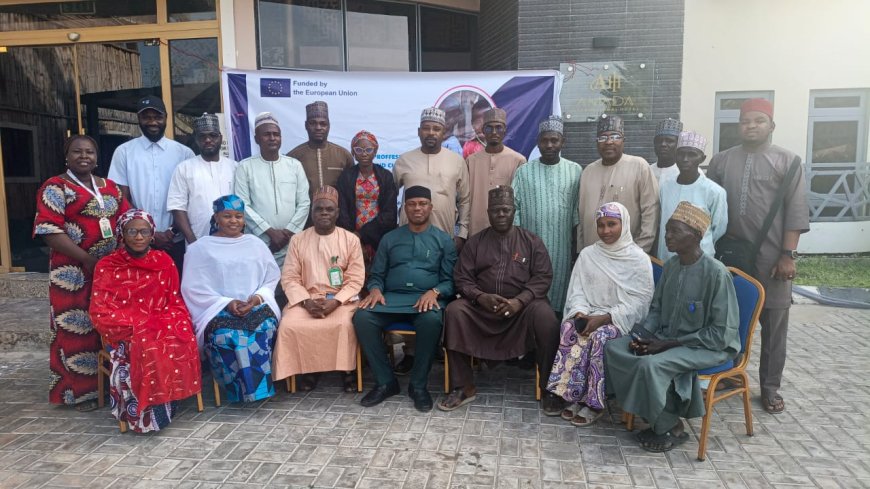
A three-day capacity-building workshop for journalists on the Alternative Care Guidelines and the Borno State Child Protection Law, 2022, has been held in Maiduguri, the Borno State capital.
The training was organised by SOS Children’s Villages Nigeria in collaboration with implementing partners under a European Union–funded project executed by a consortium comprising the Civil Society Legislative Advocacy Centre, CISLAC, SOS Children’s Villages Nigeria, and the Geridu Foundation.
The workshop, which took place at the Amanda International Hotel, is part of a 36-month intervention aimed at strengthening child protection systems and increasing public awareness through the media.
Journalists from online, print, television and electronic media participated in the training to enhance accurate reporting and effective public sensitisation on child protection issues.
Speaking on behalf of the Executive Director of CISLAC, Comrade Auwal Ibrahim Musa, also known as Rafsanjani, Mohammed Murtala said the first two days of the workshop focused on building the capacity of selected journalists across the state, while the final day consolidated learning on the Alternative Care Guidelines and the Borno State Child Protection Law.
He noted that the training is expected to improve media engagement and promote better understanding of child protection issues in the state.
According to him, the training was designed to equip media professionals with the knowledge needed to improve investigative reporting and promote public awareness of children’s vulnerabilities and existing protection mechanisms.
One of the key resource persons at the event, Professor Umar Alkali of the Faculty of Law, University of Maiduguri, presented a paper highlighting legal frameworks for child protection at the global, continental, national and subnational levels, with particular emphasis on conflict-affected areas.
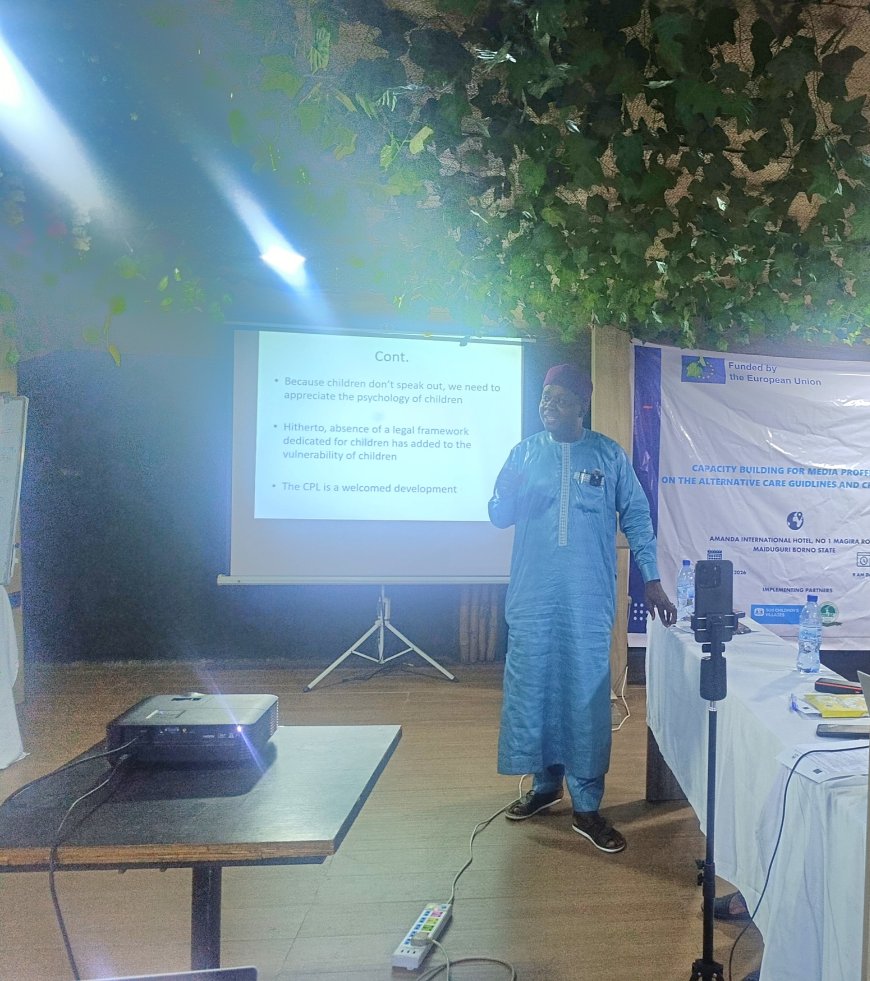
During interactive session, Professor Alkali raised concerns about the situation of children in conflict zones and asked participants to identify major challenges confronting child protection in Borno State.
Responding, a participant identified lack of public awareness of child protection laws as a major obstacle, noting that many people are either uninformed about the laws or unwilling to support their full implementation.
“When a wrong happens, society must speak and take action so that it does not continue. The protection of a child is not restricted to parents or government alone.
Everybody is involved,” the participant said.
The participant warned that failure to protect children could pose a threat to future peace and security.
“If children are not protected today, they may contribute to conflict tomorrow. Protecting them6 is assuring the peace of society,” he added.
Professor Alkali observed that the situation of children in Borno State is unique due to years of insurgency and displacement and questioned whether the challenges faced by children should be blamed on them.
Participants responded by stressing that responsibility for child protection lies with the entire society.
“Children belong to all of us. Even if you are not the biological parent of a child, his safety and growth matter to you,” a participant said.
The session identified three key pillars of child protection: provision, prevention and participation.
Provision covers children’s rights to health, education and basic needs; prevention focuses on stopping harm before it occurs and addressing its effects; while participation allows children to express their views in matters affecting them, in line with their best interests.
Speaking on stakeholder engagement, Mohammed Murtala said the Ministry of Humanitarian Affairs is the lead state agency on children’s issues, while the Ministry of Justice plays a critical role in child-related legal matters.
He added that the Ministries of Education and Health, as well as the National Agency for the Prohibition of Trafficking in Persons (NAPTIP), are also involved in planned advocacy activities.
Murtala disclosed that traditional institutions are being engaged as community gatekeepers, noting that royal fathers have begun participating in the sensitisation process.
“We have also met with the Shehu of Borno’s sister, Ya Mogoram of Borno, to seek her support in mobilising mothers and women’s groups on child protection issues,” he said.
Explaining the roles of the consortium partners, Murtala said the Geridu Foundation is responsible for community engagement and onboarding community members, SOS Children’s Villages Nigeria manages children’s homes and supports vulnerable children, while CISLAC leads high-level advocacy with ministries and government agencies.
He added that the Geridu Foundation will convene a town-hall meeting with key stakeholders next week as part of efforts to strengthen community participation and improve child protection mechanisms in the state.
In her presentation on the role of the media in implementing the Child Rights Act and protecting children, Aisha Talba Ballama highlighted challenges faced by media organisations in the state and emphasised the need for suggestion boxes in schools to enable children safely report abuse and express their concerns.
Participants at the workshop agreed that collective responsibility and sustained advocacy are essential to ensuring a safer and brighter future for children, particularly in conflict-affected regions such as Borno State.